
Suitable projects are about volume, not just scale
Removing commercial fixtures, clearing an estate or handling packaging and demolition debris across a large renovation can create significant bulk. List the materials and major items so an advisor can judge whether one larger container or staged collections better matches the job.
For ongoing work, consider how waste will reach the bin. A single large container far from the work area is not automatically a better arrangement than a smaller container with a planned exchange. Loading routes, doors and pedestrian separation belong in the site discussion.
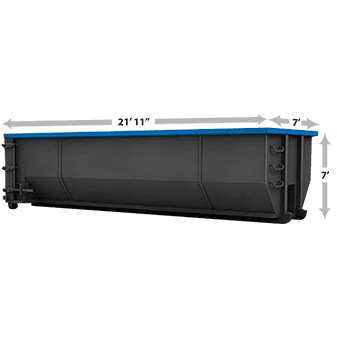
Review footprint, height and the load restriction
The source gives differing approximate dimensions for 40-yard bodies. Confirm actual length, width, height and truck clearance for the available equipment. Do not reserve a space based on nominal volume alone, particularly where overhead lines, trees or narrow entrances are present.
Dense shingles, dirt, concrete and substantial metal loads are restricted in the reference guidance for this size. An advisor needs to arrange a suitable material-specific option. Never regard the top of the sidewall as permission to fill the entire volume with a heavy material.
A large container still needs controlled loading
Keep unauthorized waste and liquids out, distribute approved material according to provider instructions and stay below the marked fill level. Bulky items sticking above the sides or outside the footprint can prevent collection. Do not climb into, burn material in or attempt to mechanically compact a load.
Agree collection or exchange timing before the container interrupts another phase of work. Check access again near pickup: project conditions can change considerably during a long cleanout or renovation. If rain, mud, a gate change or another delivery affects the route, inform the advisor ahead of the visit.