
Projects that benefit from the middle size
Removing carpet across several rooms, clearing an attic and garage together, or replacing cabinetry can produce a mix of flat material and bulky pieces. Describe that mixture rather than only naming the room being remodeled. A renovation with heavy tile can have a very different load from the same-sized space filled with cardboard and wood.
An outdoor cleanup may also suit this size when the receiving facility accepts the planned yard material. Stumps, soil and mixed vegetation are not interchangeable waste streams. Explain exactly what will go in the bin and whether it will be separated.
Check the available container before allocating space
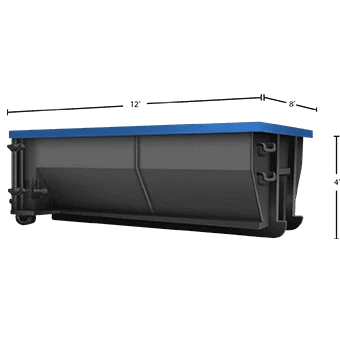
One source example is approximately 12 feet long, 8 feet wide and 4 feet high. Those dimensions are illustrative; nominal volume does not identify a single manufacturer or body style. Ask for actual dimensions, rear-door clearance and the delivery truck’s access needs.
A walk-in door, where supplied, can help arrange larger items without lifting them over the side. Keep the opening accessible while loading and follow the provider’s instructions for closing and securing it. The transport fill limit still applies even if more items could physically be balanced on top.
Material approval is part of choosing the size
Refrigerant appliances, tires, liquids, asbestos-containing waste and hazardous substances cannot be treated as ordinary household debris. Furniture, mattresses and particular yard materials can also have local handling conditions. Identify these items before accepting a quote.
Compare this size with a 10-yard bin when the job is tightly defined, or a 20-yard bin when the scope includes several bulky items. Ask what the quote includes for time, weight and collection, and how an extension or additional haul is arranged.