
Where a smaller container makes sense
Clearing one garage, replacing bathroom fixtures or removing material from a focused renovation can generate more waste than regular collection handles. A smaller container keeps that disposal stream separate without automatically selecting the largest footprint. List the bulky items before choosing: long cabinets and furniture can be awkward even if the estimated volume seems modest.
A short driveway does not by itself prove a 10-yard bin will fit. The delivery truck needs a workable approach and room to set the container down and retrieve it. Share photographs or measurements with the advisor when access is tight; the provider must review the actual position.
Volume, footprint and weight are different measurements
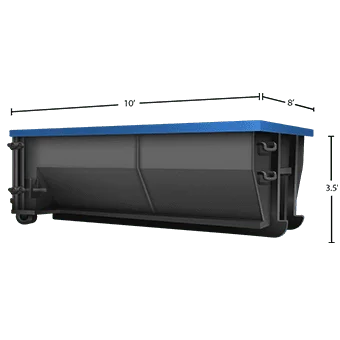
Ten cubic yards describes nominal container volume, not an included tonnage allowance. ASAP’s reference gives an example footprint of about 10 feet long by 8 feet wide, with 3.5-foot sides. Designs vary. Obtain the dimensions of the available container and the access requirements for its truck before reserving space.
Concrete, brick, dirt and other dense material need a separately approved load plan. Some clean-material streams require a dedicated container and restricted fill depth. Do not mix them into a household load on the assumption that an apparently empty bin has unused weight allowance.
Getting useful space from the bin
Identify the material that will actually leave the property before delivery. Keep reusable items out of the loading area and arrange any prohibited waste separately. If a walk-in door is supplied, ask how it must be secured before transport. Break down safe-to-dismantle bulky items; do not climb into or compact a loaded container.
Tell the advisor if the project may expand. A second collection or a larger size can be discussed before an overloaded bin becomes the problem. Pickup needs to be agreed, and the route must remain clear for the truck.